
Sarasota and Manatee County
(941) 961-2846

High-quality air filters cost more, but they can easily pay for themselves by improving indoor air quality (IAQ), reducing the likelihood of expensive repairs, and improving your system’s efficiency and performance. In fact, it’s estimated that a clean, high-quality air filter can reduce your air conditioner’s energy consumption by as much as 16 percent!
The basic function of any air filter is to trap dust, pollen, mold spores, and other airborne particles in its fibers. As filters age and deteriorate, they lose the ability to trap new particles, and they can release those same fibers and other debris into your system.
Higher-quality air filters will trap more particles, this is particularly important if you suffer from allergies or a respiratory condition like asthma or COPD, but a higher MERV rating is no substitute for a properly fitting filter that is changed regularly, and you can overdo it. A higher MERV rating means less airflow, which can damage your HVAC system.
When any air filter becomes clogged, air will bypass the filter
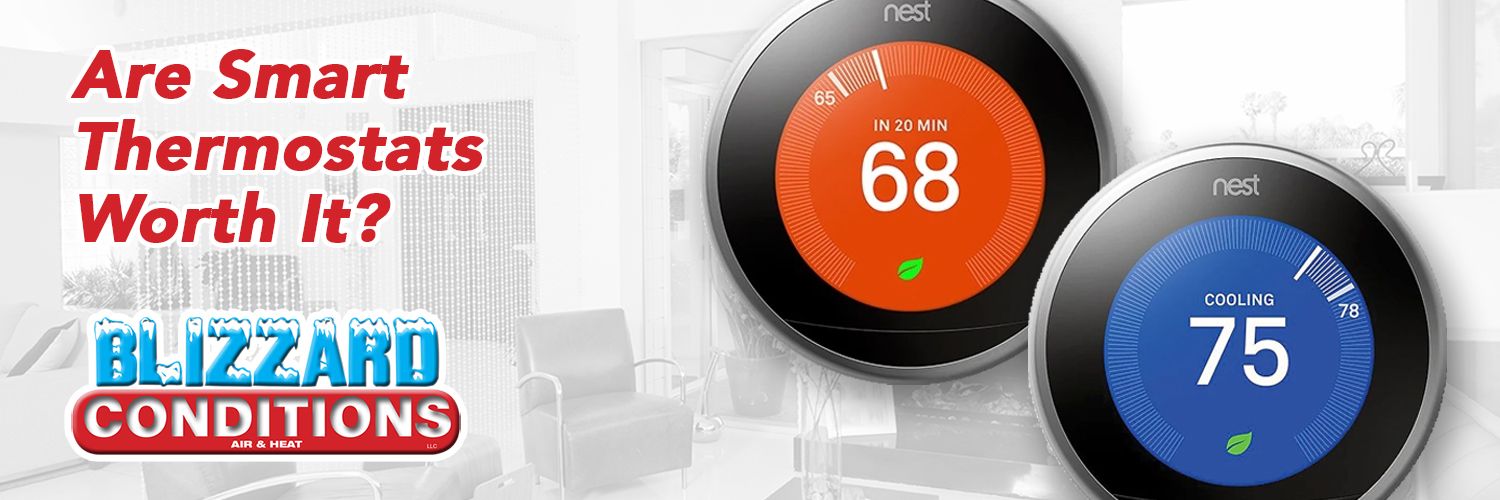
Let’s begin by defining our terms… There are 3 basic types of thermostats: Manual Thermostats, Programmable Thermostats, and Smart Thermostats.
Manual Thermostats, the kind you might find in a hotel room or a very old home, allow you to manually set the temperature – that is all. They’re inexpensive, but they’re not especially precise or energy efficient. Programable Thermostats, a giant improvement over Manual Thermostats, automatically adjust the temperature based on a pre-set schedule – if you take advantage of that feature.
So what makes a thermostat “smart” and are they worth the added upfront cost?
Whether it’s a thermostat, washing machine, TV or blender, the “smart” prefix simply means that the device is Wi-Fi enabled so it can connect to an app on your smartphone or tablet.
The most basic Smart Thermostats just allow you to adjust the temperature remotely. This means that you can set the thermostat to your desired temperature before leaving work for the day or on your way home from the airport after a vacation or business trip, while maintaining an energy-saving temperature while you’re away from home. Conversely, if you realize on day 3 of your vacation that you didn’t turn up the thermostat